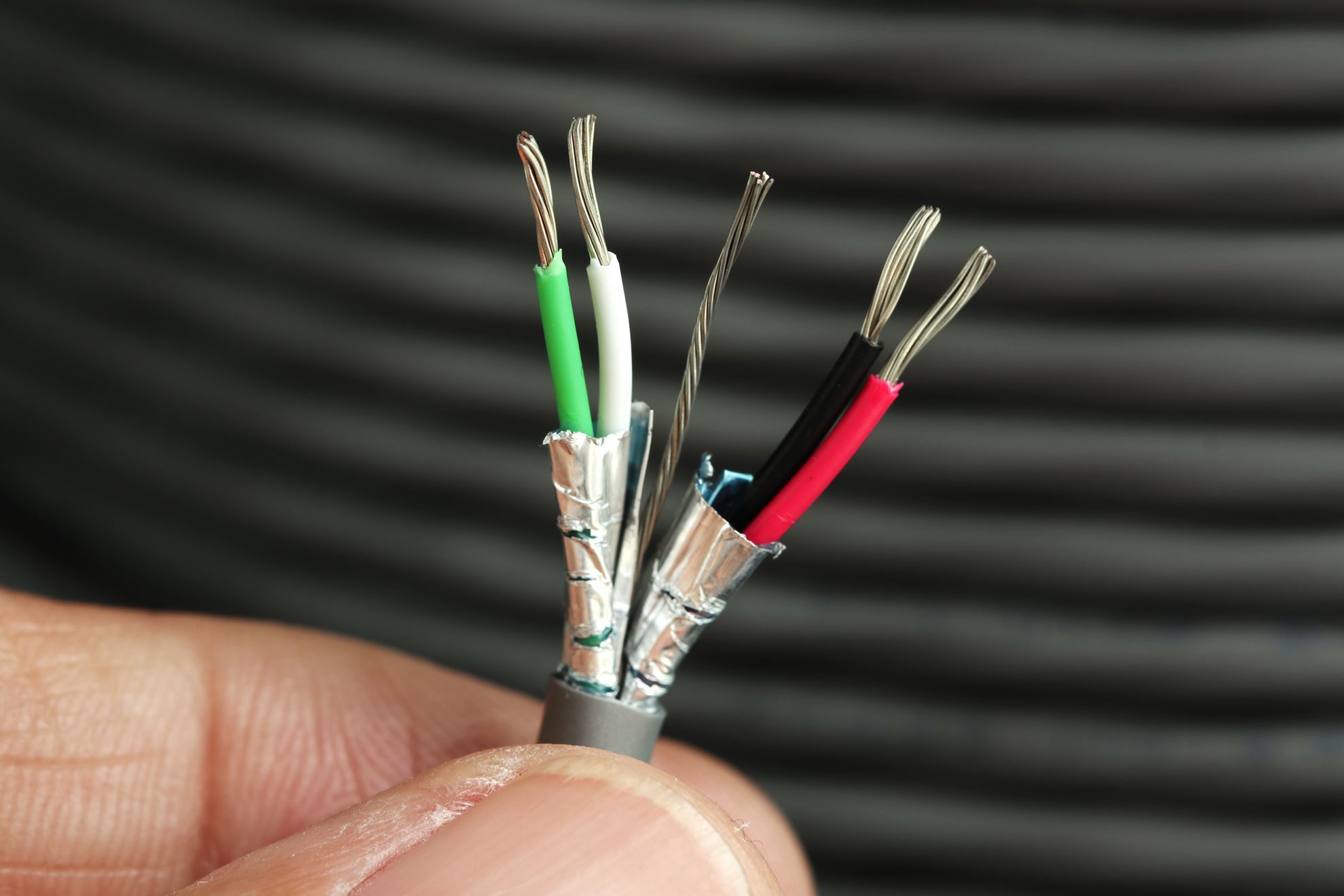
When it comes to running shielded twisted-pair (STP) cabling, grounding might not be the first thing you think about. But how you ground your cables can make the difference between a reliable, noise-free network and one plagued with mysterious issues.
Let’s take a closer look at why grounding matters, the common pitfalls, and how following best practices can keep your system running smoothly. Following are the takeaways you’ll gain from this information:
When installing shielded cabling, remember:
-
One end grounded = stable, quiet, reliable.
-
Both ends grounded = noise problems waiting to happen.
-
Surge protection with GDT = the best of both worlds.
The Basics: Why Grounding Is Important
Shielded twisted-pair cables are designed to keep external electrical noise such as electromagnetic interference (EMI) away from your data signals. The shield acts like a barrier, capturing unwanted noise and directing it safely to the ground.
But here’s the catch: how you ground the shield determines whether it actually protects your system or creates more problems.
Grounded at One End (Best Practice)
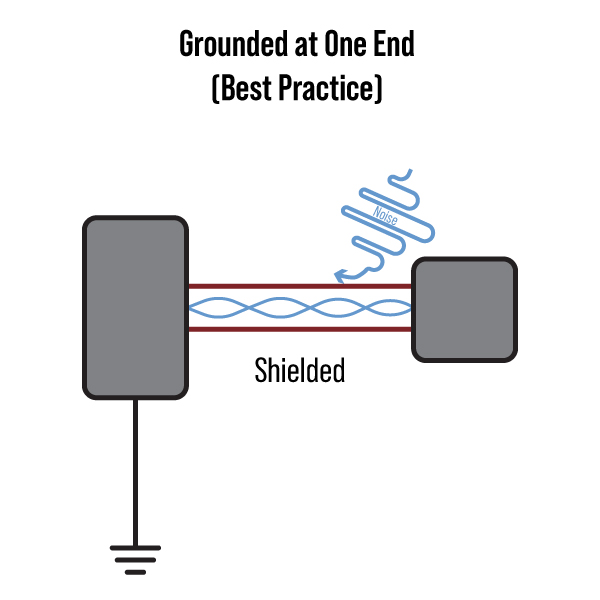
Grounding the shield at only one end of the cable is the long-established best practice. Why?
-
No ground loops: If only one end is grounded, there’s no path for current to flow along the shield. That means you avoid the “loop” effect that can inject noise into your data lines.
-
Effective shielding: A single, solid ground connection is all the shield needs to do its job—diverting unwanted noise away from your signal.
-
Signal integrity preserved: With one grounding point, the balanced design of twisted pairs works as intended, minimizing interference and keeping data transmission stable.
In short: one clean grounding point gives you the protection you want, without introducing new problems.
Grounded at Both Ends (What to Avoid)
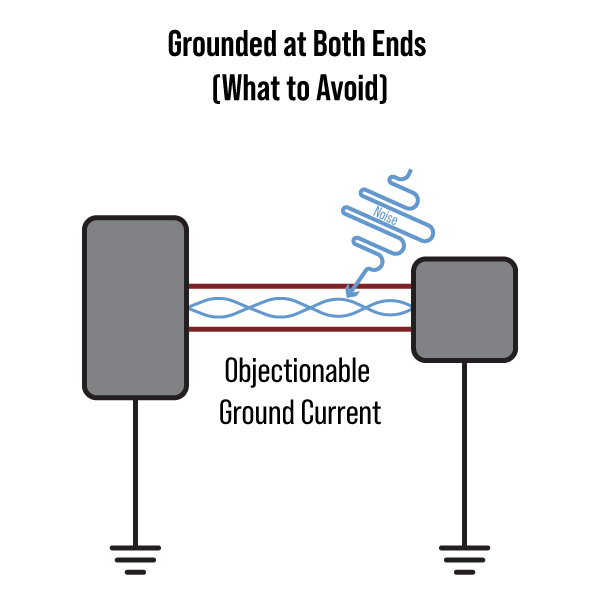
It might seem logical to ground both ends of the shield for “extra” protection, but this often backfires.
-
Objectionable ground current: Differences in ground potential between two locations create a current flow through the shield.
-
Noise injection: That unwanted current can couple into your data lines, causing errors, dropped packets or even equipment stress.
-
Unstable performance: What looks fine in one environment may quickly fail in another, especially in industrial or outdoor installations.
This is why most standards and seasoned installers recommend grounding only at one end.
Shielded Cable Grounding Checklist for Installers
Before Installation
-
Confirm whether shielded twisted-pair (STP/FTP) cabling is required for the environment (high EMI, industrial, outdoor).
-
Verify compliance requirements (TIA-568, ISO/IEC 11801, IEEE surge protection guidelines).
-
Choose the right shield type (foil, braid or foil+braid) for your use case.
-
Ensure all connectors, patch panels and jacks are rated for shielded cabling.
During Installation
-
Maintain proper cable bend radius and avoid crushing the shield.
-
Keep shield continuity intact — do not strip too much foil/braid when terminating.
-
Ground the shield at only one end of the run (typically at the patch panel or rack).
-
Bond patch panels and racks to the building’s grounding system as required.
-
Avoid running shielded cables parallel to power lines to reduce induced noise.
After Installation
-
Verify shield continuity with a cable certifier or continuity tester.
-
Test for ground loops (check potential difference at both ends before connecting).
-
Add surge protection (with GDTs) for outdoor or long cable runs.
-
Label cables and document grounding points for future maintenance.
-
Re-test after connecting equipment to confirm stable performance (no errors or packet loss).
Where Surge Protection Fits In
So, where do Ethernet surge protectors come into play? The best devices respect this one-end grounding rule by keeping the shield isolated from the safety ground under normal operation.
Even better are designs that use a gas discharge tube (GDT) between shield and ground. These act like a safety valve: normally isolated to prevent ground loops, but ready to clamp and divert dangerous surge energy like lightning or electrostatic discharge (ESD) safely to ground when needed.
With a GDT, you get surge and lightning protection, continued noise isolation and long-term equipment safety.
This is exactly the approach built into Transtector’s best-in-class ALPU-F140 outdoor and DPR-F140 indoor Gigabit Ethernet / PoE++ surge protectors. The indoor unit uses the same isolated topology, which is great to use in a pair together at each end. With a 20 kA-rated GDT for shield-to-ground protection, the ALPU and DPR combine industry best practices with robust surge-handling capability, making it a trusted choice for outdoor, industrial and telecom environments.
FAQs on Shielded Cable Grounding
Q1: Why should shielded cables be grounded at one end only?
A: Grounding at one end prevents ground loops, which can otherwise inject noise into the network.
Q2: Can I ever ground both ends of a shielded cable?
A: In very specific industrial environments with bonding requirements, both-end grounding may be used with special considerations—but for most commercial and enterprise networks, it is discouraged.
Q3: Do I need surge protection if my cable is already shielded?
A: Yes. Shielding prevents EMI/RFI, but it cannot handle large surge events like lightning. Surge protectors with GDTs complement shielding by safely clamping excess energy.
Q4: Where should I ground the shield—at the patch panel or device?
A: Typically, the shield is grounded at the patch panel or equipment rack side, ensuring a stable and accessible grounding point.
Q5: Does improper grounding affect PoE performance?
A: Yes. Poor grounding can create instability, heat buildup or packet loss in PoE and PoE++ applications.
Shielded cable grounding is not just a technical detail—it’s the difference between a high-performance network and one vulnerable to downtime. By following one-end grounding practices, avoiding common pitfalls, and incorporating surge protection, installers can deliver networks that are resilient, standards-compliant and future-ready.