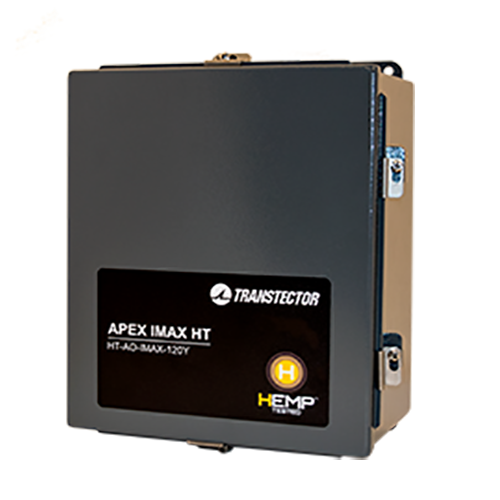
The growth of nuclear powers around the globe has elevated the threat of high-altitude electromagnetic pulse (HEMP) technology. The fear is that it will be used to disrupt power grids, communication networks and other infrastructure. To address this threat, Transtector offers AC surge protected panels to prevent damage from HEMP as well as overvoltage caused by lightning surge and other power spikes.
Key Takeaways
-
HEMP (High-Altitude Electromagnetic Pulse) poses a serious risk to critical electrical infrastructure, including AC power systems.
-
Transtector’s AC surge protectors are tested to military standards such as MILSTD188125, indicating compliance with early-time (E1) and intermediate-time (E2) pulse threats
-
Effective protection requires surge devices with very fast response, low let-through voltage levels, and design for both lightning and induced surge events.
-
Deploying HEMP-rated surge protection devices (SPDs) help ensure mission-critical systems (defense, telecom, utilities) remain operational in extreme electromagnetic environments.
-
Proper specification, installation, grounding, and periodic verification are essential to realize full benefit of HEMP-rated SPDs.
Our HEMP-tested AC surge protectors provide overvoltage protection for your equipment and support long-term system reliability by absorbing high amounts of transient energy while maintaining a low clamping voltage.
The Threat
HEMP is an electromagnetic chain reaction created by a nuclear explosion detonated high above our planet’s surface. The gamma ray pulse from the payload reacts with the Earth’s atmosphere to create a HEMP event. Power grids, communication networks and other critical infrastructure can be disrupted.
To create standards and test requirements for building infrastructure that can withstand HEMP, the U.S. military developed MIL-STD-188-125 in the 1990s. It applies to facilities that perform critical, time-urgent command, control, communications, computer, and intelligence functions. The tests for this standard are severe and pass requirements are high.
Recognizing the need for a standard that could be applied to civil life, the U.S. Department of Homeland Security (DHS) released the Electromagnetic Pulse Protection and Restoration Guidelines for Equipment and Facilities in 2016.
The Protection
Transtector’s HEMP-tested AC surge protectors have passed the stringent tests of MIL-STD-188-125 and reflect the DHS’s guidance as well. They reliably protect communication networks, TV/radio broadcasting facilities, computer equipment, economic infrastructure, process control in banking/finance, road and rail signaling systems, mobile networks, utilities and power grids, first responders and civil defense.
Key features of our HEMP-tested AC surge protectors:
- Panel form factor, rated for outdoor use
- Protection from HEMP, lightning surge, other destructive transients
- HEMP-tested per MIL-STD-188-125 E1 and E2 waveforms
- 60dB shielding effectiveness
- Max surge capacity of 160 kA
- Service voltage options of 120/240 Vac split-phase and 120/208 Vac wye
- Use of SASD and MOV hybrid protection technology
- Safety/performance rated to UL Standard 1449, 4th Edition, Type 2
Our HEMP-tested AC surge protectorsare in-stock and available for immediate shipment. They are part of our comprehensive line of AC surge protectors.
For more information, see our brochure on “HEMP Solutions for Civil Infrastructure,” visit Transtector.com or contact us at +1 (208) 635-6400.
FAQs (Frequently Asked Question)
Q1: What does HEMP stand for, and why is it relevant?
A: HEMP stands for High-Altitude Electromagnetic Pulse. It is a burst of electromagnetic energy created by a nuclear explosion at high altitude, which can induce very high voltages and currents in electrical systems. For critical infrastructure, HEMP represents a credible threat requiring specialized surge protection.
Q2: What standards apply to HEMP-rated surge protectors?
A: Commonly cited: MIL-STD-188-125 for fixed ground-based facilities addressing early-time (E1) and intermediate-time (E2) threat environments.
Q3: How is HEMP protection different from standard lightning surge protection?
A: Standard surge protection (lightning, switching transients) typically deals with lower rise-times and longer duration surges. HEMP involves extremely fast rise-times (nanoseconds) and induced currents over a wide area, requiring SPDs with very low let-through voltage and fast reaction.
Q4: Can HEMP-rated SPDs also protect against everyday surges?
A: Yes. A well-designed HEMP-rated SPD will typically also cover lightning and switching surges, but you must verify the device ratings for both types of events (lightning, HEMP).
Q5: Where in an installation should HEMP-rated surge protection be located?
A: Ideally at the service entrance of the AC power system feeding critical loads, with bonding to ground and short conductor lengths. Additional localized protection near sensitive loads may also be advisable.
Q6: Is grounding important for HEMP protection?
A: Absolutely. Without a low-impedance path to ground, induced surge energy cannot be effectively dissipated, reducing the effectiveness of the SPD. Good grounding is essential to HEMP mitigation.